The year started with desperate news from around the world. Wars continued and were compounded by the northern hemisphere winter weather. The rounds of infectious diseases flared up causing more pressure on overstretched services. Protests were squashed, at times in a deadly manner. And international tensions were inflamed by the un tempered actions of a near fascist administration in one of the most powerful countries in the world.
In this sad mix of threats and tragedies, there was one story which really hit home for me. People were getting killed when peacefully protesting against the frankly illegal actions of the Immigration and Customs Enforcement, ICE, squads that had been dispatched to Minnesota. There was targeted activity elsewhere but this had been made particularly poignant by the brutal deaths of two peace loving individuals.
I grew up mostly in North America in the fifties and sixties. It was a time of massive national pain and challenge, while people fought with their lives for their human rights. We saw at close hand the changes start to happen in Virginia, as a few very strong and brave individuals made the first inroads to integration in education.
My experience as a child of immigrant parents who had come to find a better future from postwar Britain, was very mixed. As a white family we never had to face the dreadful prejudice or discrimination that our counterparts of Colour dealt with every day.
Also we were economically cushioned as our Dad started to realise his dreams and carved a career for himself. Our lives though were played out against a background of confusion. The Land of the Free was not for everyone. The making of the nation had been wrought with scant regard of the cost for the First Nations and Civil Rights were yet to be fully introduced.
But fundamental beneath these contradictions were the individuals who worked hard to try to make their country a fairer and more inclusive place to live. We were privileged to meet and be friends with some lovely honest and caring people. And when they joined with likeminded others, they became stronger in their beliefs and actions.
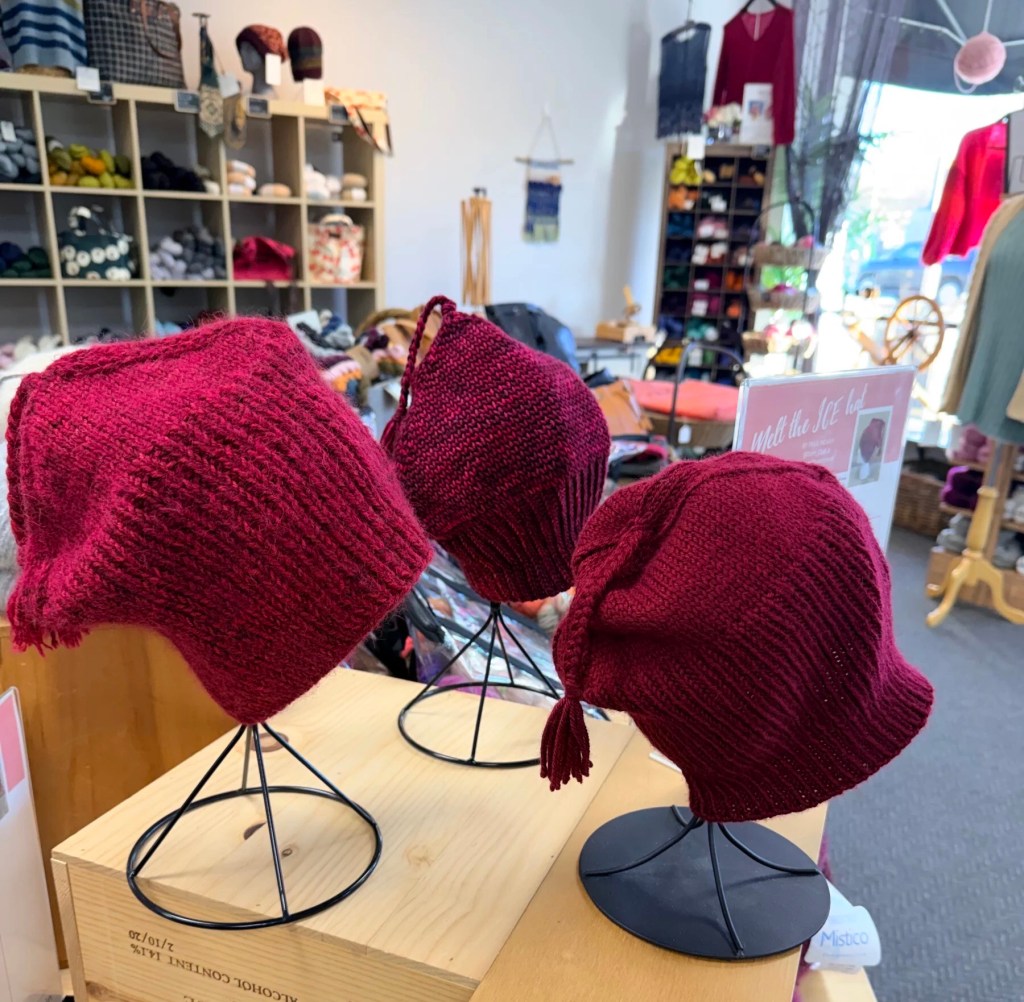
The current trend for for red hats among the news shots of the people in Minnesota gathering against ICE could be seen as coincidental. However, this is actually a sign of protest. It has been inspired by a resistance movement in Norway that arose against the Nazi occupation. It was meant to be a symbol of peace and nonviolence, a symbol of hope during what has been described as darkness.
The pattern for this style of hat has been sold at a local knitting shop and the money raised has been divided between two local not for profit organisations giving housing support for immigrants. Increasingly, as people have rallied together the red hat has been adopted as symbol of resistance and identity. An example of people coming together.
Fifty years on, from afar, I am looking at a country tearing itself apart. Not just because of drives to overpower or overwhelm any opposition but also by imposing orders that go against every fair and freethinking individual. The situation in the States is sobering.
There is an enactment of reacting extremely, often violently against anything or anyone who is perceived as ‘different’ or alien from the perceived ideal. This includes immigrants, refugees, asylum seekers, Native Americans, disabled people, and anyone who resists against the imposed rule.
Although desperately sad and awful to watch, we in the UK are relatively safe. Unless you are perceived to be Other than the aspired norm. Class still has a massive impact. The rich and powerful live in a different world to those who are managing with significantly less, or indeed those who are impoverished.
If you are rich and disabled or an economic immigrant with resources to call on, then you come under little scrutiny.
If you come to this country as a refugee, an asylum seeker, an immigrant struggling for a better life, without that cushion, there is little welcome.
If you are a parent with a limited means, then your local food bank becomes your local supermarket. Terrible choices are made around income, often determined by a need for the well being of the children rather than the adult/s.
If you are disabled and reliant on benefits then you are perceived as an economic drain on society, and you are demonised. Any suffering directly linked to draconian changes or failures within that system are hidden or minimised.
If you are Trans then you risk increasing persecution for something as simple as going to to the toilet. There is a liklihood that the exclusions will continue to grow in the face of a well funded movement with scant regard for individual rights.
If you are a Traveler or of Romany heritage, you risk being turned out of the land that was once assigned for you to stay on. Prejudices abound and there seems a reluctance to recognise the people within this culture.
If you are a member of a religious grouping then spiritual beliefs are at risk of becoming minimised by politically driven divisions. This can at times become deadly when driven by ignorant hatred.
Similarly if you are a Person of Colour, the stereotypes are inflamed by mass media as a justification for discrimination. Racism may go underground briefly by when inflamed by far right viewpoints it can leap back into public perception.
If you are someone who can’t afford a devise or the internet, there is a risk you will lose benefits that demand online applications. The growing dependence on technological information sharing and the intrusions into every day living can be societally disempowering to those without access.
If you are actively engaged in equalities work, a growing group will attempt to intimidate or even cause you to lose your job. There is an acknowledged widespread backlash against inclusion and the boundaries of equality are being redrawn. There also seems to be a growing movement of publicly ridiculing others engaged in this work, and indeed spurious claims made against them.
These are just a few examples barely scratching the surface. The common perception of Other is frightening. There is a fine line being drawn between disadvantage and oppression. We don’t all have to agree with one another, after all discussions foster change and growth. This immediately fails when rigid party lines are adopted and there is a refusal to listen carefully to what is being said.
Parliamentary debates spring to mind when thinking about party lines. They are so predictable and are crafted to limit a true exchange of ideas. Plus there is so much barracking that contributes to rudely heckling someone. This hardly seem like a model for healthy debate. It seems the more co-operative exchanges happen behind the closed doors of Committee work.
The press appears to quickly adopt the populist drives of the day. If someone who is a celebrity is involved in a scandal then a ridiculous amount of space and time is spent rehashing the same minor events of their lives. Very often this celebrity status is based not on their hard work but simply by being a celebrity. There is no true authority or value involved, simply public perception fostered by publicity.
It seems even the broadsheets are not without prejudice. There are exceptions of course, particularly when something of importance occurs. Then we rely upon and trust the press to report the facts honestly and impartially. One of the positive impacts of information technology is the rapid reporting of international events. I am sure this has been important in attracting global notice to the actions of ICE in Minnesota.
But in the UK there is a conflict of ideals around the wider issues. While groups of people are demonised for being Other, the privileged few continue to determine the political directions of society. Considerations that could provide at least partial solutions to basic inequality are not obviously on the table.
A basic wage for everyone, a long term strategy for ensuring disadvantaged people have access to education, training, work opportunities and other basic needs could be considered across the political parties. Housing, healthcare and access to water which is essential for life has become confused by the dependency upon the number of years a party holds political power.
Our country, in common with the rest of the planet is rapidly approaching global catastrophe. Privatised water companies throw around unimaginable amounts of money while continuing to pollute our fresh and sea waters. Surely there needs to be an urgency written in to this being resolved. The provision of water is not just about having it on tap or effective sewage systems. The impact on the land and ecosystems cannot be separated from how water is gathered, used and disposed of.
These are only a few of my areas of concern. Overall I come back to a sense of frustration that there appears consistently a reluctance to work together towards achievable strategies that would benefit the whole of the UK. Instead, the power continues to be held transiently by changing governments which fuels the party identity similar to basic gangs fighting over who is the best or the strongest.
The role of privilege in the UK is firmly tied to to power shielded by economic gain and property values centuries old. The class system remains alive and thriving in a manner I could never have foreseen as I was growing up. My generation of ‘baby boomers’ post war were given an idealised picture of a world that would be rebuilt into a fair society with a deep seated avoidance of war.
While that wasn’t long enduring, we were able to embrace giving peace a chance and the power of love fleetingly enough to be impacted upon. Similarly to my experiences in the States in the sixties, there are many people in this country who are fair and tolerant, especially young people. We need them to continue to join with others and ensure that our four nations are striving towards inclusion and respect for all.
Gilah Mashaal
 Julie Newman, visual artist