Tradition allows the presence of women sailors in history as marginal and generally achieving fame dressed as men. In this form they are largely pirates or in the navy. However, women have been sailing for centuries providing for their families by shipping cargo to larger ports, supporting the men who were battling to save their lands, or indeed as explorers.
One such who exists in early records is Ladgerda, the Norwegian Shield Bearer, first written about in the twelfth century history of Denmark, Gesta Danorum, by Saxo Gramaticus.
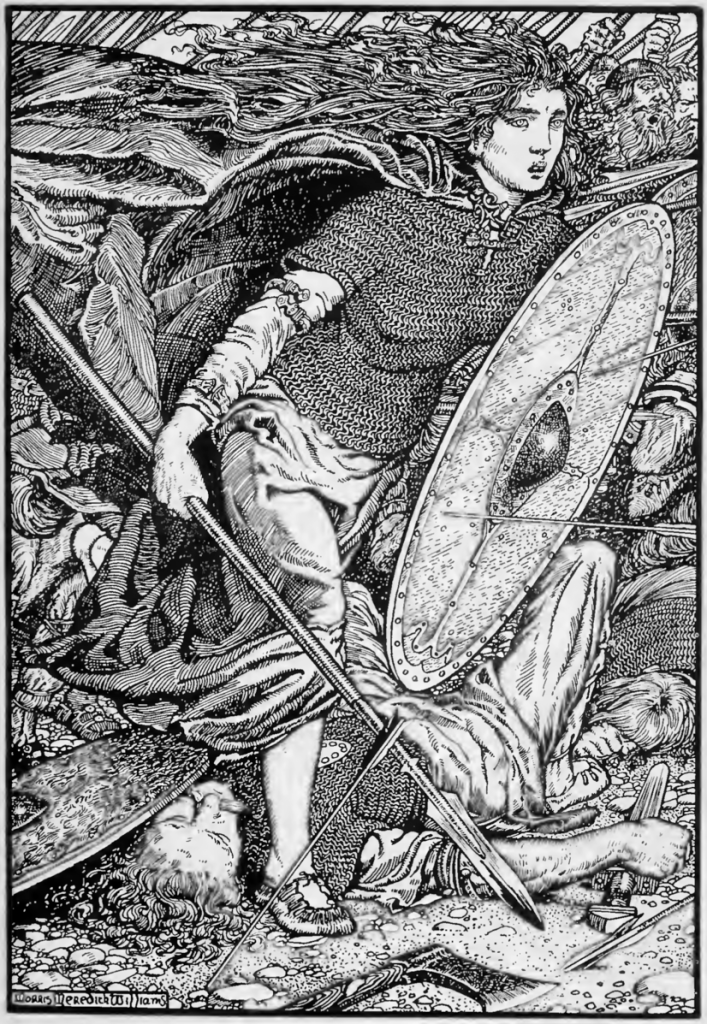
His relating of her story has been dismissed as a fictional variation of the Valkyries, and Brunhilda. However the question remains if this could be influenced by a repugnance of a strong independent woman capable of acts of violence on a par with men?
Her name has several variations and the most common of those is Lagertha. It is accepted that the story given by Saxo becomes the reference point from which stories about her are created. She was featured in a 2013 series Vikings. She is identified as a shield maiden who then becomes a queen.
The story tells of Lagertha having been captured with others by a Swedish invading king. They are put into a brothel and humiliated. The grandson of the slain Norwegian king, Ragnar, vows vengeance and liberates the women as he battles against Fro, the Swedish king. Some of the women put on men’s clothes and fight alongside Ragnor.
According to Saxo, “Ladgerda, a skilled Amazon, who, though a maiden, had the courage of a man, and fought in front among the bravest with her hair loose over her shoulders. All marvelled at her matchless deeds, for her locks flying down her back betrayed that she was a woman.”
Ragnar courted and won her with a deed of courage and determination that led to their marriage. Again, according to Saxo, after bearing three children Lagertha was cast aside by Ragnar who divorced and married the Swedish daughter of a king.
Ragnar continued to be caught up with battles in Denmark, and was at one point out fought and in peril, with his son injured, when he asked Lagertha for help. She sailed with 120 ships and came to his rescue.
Saxo recounts, “Ladgerda, who had a matchless spirit though a delicate frame, covered by her splendid bravery the inclination of the soldiers to waver. For she made a sally about, and flew round to the rear of the enemy, taking them unawares, and thus turned the panic of her friends into the camp of the enemy.”
However, on her return to Norway, she fell out with Ragnar and murdered him. Saxo concludes that she then “usurped the whole of his name and sovereignty; for this most presumptuous dame thought it pleasanter to rule without her husband than to share the throne with him”.
Thus the Danish historian dismissed Lagertha. There is no recognition that this is a woman who may well have fought back against a violent and bullish man. Her intentions may well have been to usurp power, but perhaps her will not to be dominated strengthened her need for freedom.
Whether Lagertha actually existed, the fact remains that she was adopted into Norwegian folklore. She sailed a flotilla of ships to rescue a man noted for his fighting prowess. She later determined to rule her country in an age which was perilous. Norway was still caught up with battles with potential invasion from Sweden and Denmark. Yet she chose to rule and fight for her country.
 Julie Newman, visual artist
Leave a comment