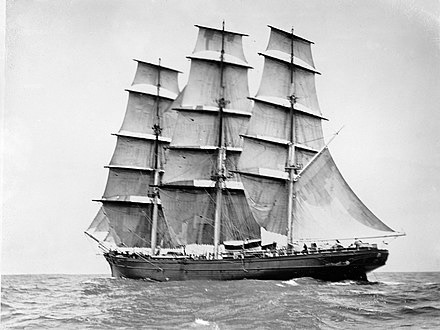
The introduction of the tea trade globally from the early sixteen hundreds was the start of highly competitive trade practices, the instigation of several wars, growth of illegal drug trading, indentured working, slavery and in the mid nineteenth century it impacted on ship design. By this time the favoured design was sleek and able to take as much sail as possible to create speed when transporting cargo. The favoured and envied ships were the American clipper ships.
These ships were narrow hulled with a sharp bow, designed to cut through the waves at speed, or a ‘fast clip’. The three masts seemed to be optimal for increasing the spread of canvas, so the coverage of sail was massively increased. The clippers were ideal for trade with China being the only source of tea trade at that time.
John Willis, who operated a family shipping company commissioned the building of The Cutty Sark in Dunbarton and she was completed in 1869. She was constructed with a wrought iron frame covered with wooden planking. This was then covered in a copper skin. The build was overseen by Captain George Moodie who then took command of her. Upon completion she was sailed down to London.
The Cutty Sark left East India Docks, London bound for Shanghai on 15th February, 1870. She sailed via the Cape of Good Hope carrying beer, wines and spirits, arriving on 2nd June. Her return journey was loaded with tea, roughly over 1,300,000 tons worth. She arrived back on 13th October.
Captain Moodie stayed with the Cutty Sark for the first three of her eight trips to Shanghai. By 1880, the tea trade for sail ships was coming to an end. They could not sail in the Mediterranean and Red Seas to compete with steam ships which were able to use the Mediterranean and the Suez Canal to shorten the journey significantly. The Suez Canal as a narrow channel was not suited to ships in sail and the cost of being towed was prohibitive.
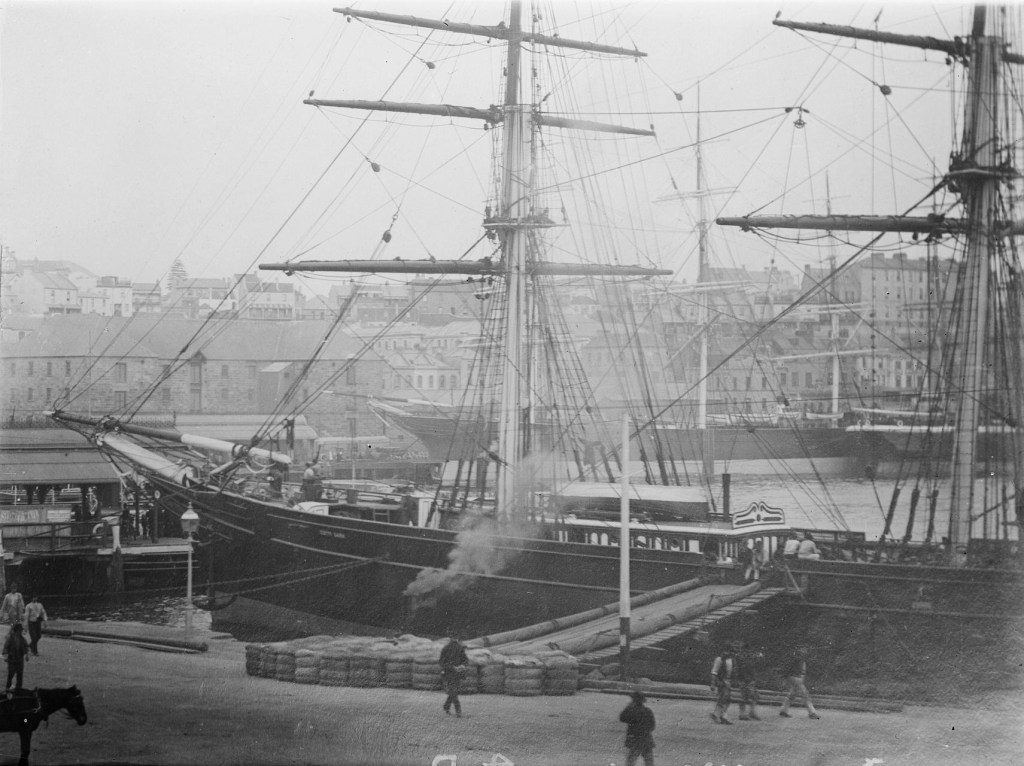
After two years of upheaval with captains and crew, having been sold on, she was used to build up trade with Australia and transport sheep’s wool to Britain’s weavers. Her sail coverage gave her a massive advantage when sailing the strong trade winds around Cape Horn. She regularly achieved speeds of 17 knots and was the fastest ship in the wool trade for ten years.
Eventually steam ships saw the end of the commercial use of sailing ships. The Cutty Sark was sold in 1895 to a Portuguese trading company where she remained until 1922, when she was bought by an enthusiast and changed into a training ship. This lasted until 1954 when she was transferred to a Greenwich dry dock for permanent display. She is now a part of the National Historic Fleet, and is one of only three composite built clipper ships from the nineteenth century in the world.
The National Maritime Museum in Greenwich has maximised the draw of the Cutty Sark and has a wealth of information both in person and on site to inform tourists. The attraction has been enhanced after the devastation of fire hit her twice. She serves to illustrate the glory of sailing but also carries significant social history.
The history of the tea trade is rife with controversy, in part through being directly linked to the illegal trade of opium as a major source of revenue. It was considered a substitute for the silver demanded in exchange for tea and led to two wars with China.
Tea use in England became more widespread from the 1600s and into the 1700s. It was the source of national revenue and served as tinder box for the American War of Independence. The taxes exacted in the colony were considered unfair locally as they were designated as British revenue. Hence the strap line, ‘no taxation without representation’ grew as a rallying cry. With that initially, the barrels of tea were thrown into the harbour in Boston as a protest and the British moved in to quell the insurrection. The rest as they say, is history.
Additionally though, it also had an impact on general health. As tea became more widely available incidences of typhoid went down significantly after water was boiled to brew the leaves. This was before the rise in Corporation responsibilities of sewage disposal and the provision of clean drinking water.
The taxes associated with beer and whiskey became prohibitive so the recourse was to drink the increasingly contaminated water. However there was also a rise in the temperance movement which was exercising an influence social attitudes to alcohol. Drinking tea served as an alternative to alcohol and was promoted by the abolitionists.
The taste for sweetened tea created a demand that was fulfilled through sugar produced by slaves on plantations in the Caribbean. The sugar trade was inextricably linked to the increased production of tea. Thus as the demand and availability of tea became more widespread, as did the demand for sugar,
China exacted very rigorous trade restrictions. There were no available tea plants to take away from China, so that remained the only source until the discovery of Assam tea plants in India. Add to that the theft of some tea seedlings and the resulting ability to propagate new plants which was seized on eagerly by the commercial buyers.
This led to the creation of tea plantations by predominantly white European colonists, who saw the opportunity to create wealth. Their tea would challenge the need for continued reliance on China. Needless to say workers on plantations were vulnerable to harsh working practices. Their housing, income and sustenance was too linked to the demands of the plantation owners.
The conditions the workers and pickers are still to this day the subject of concern. An example being the income of the tea pickers in Assam being significantly below the globally agreed poverty level. There is now more exposure to what was once more hidden work practices and subsequently more awareness. There is a growth in fair trade buying and larger producers are being made accountable.
In the twenty first century there is a wealth of teas to choose from. The concept of needing well over 100 days of travel to bring tea from China to England is beyond imagination. However, the sight of a ship in full sail does capture a deep longing for those who feel the call of the sea.
Further reading can be found..
https://en.wikipedia.org/wiki/Cutty_Sark
https://www.rmg.co.uk/stories/blog/cutty-sarks-maiden-voyage
 Julie Newman, visual artist
Leave a comment