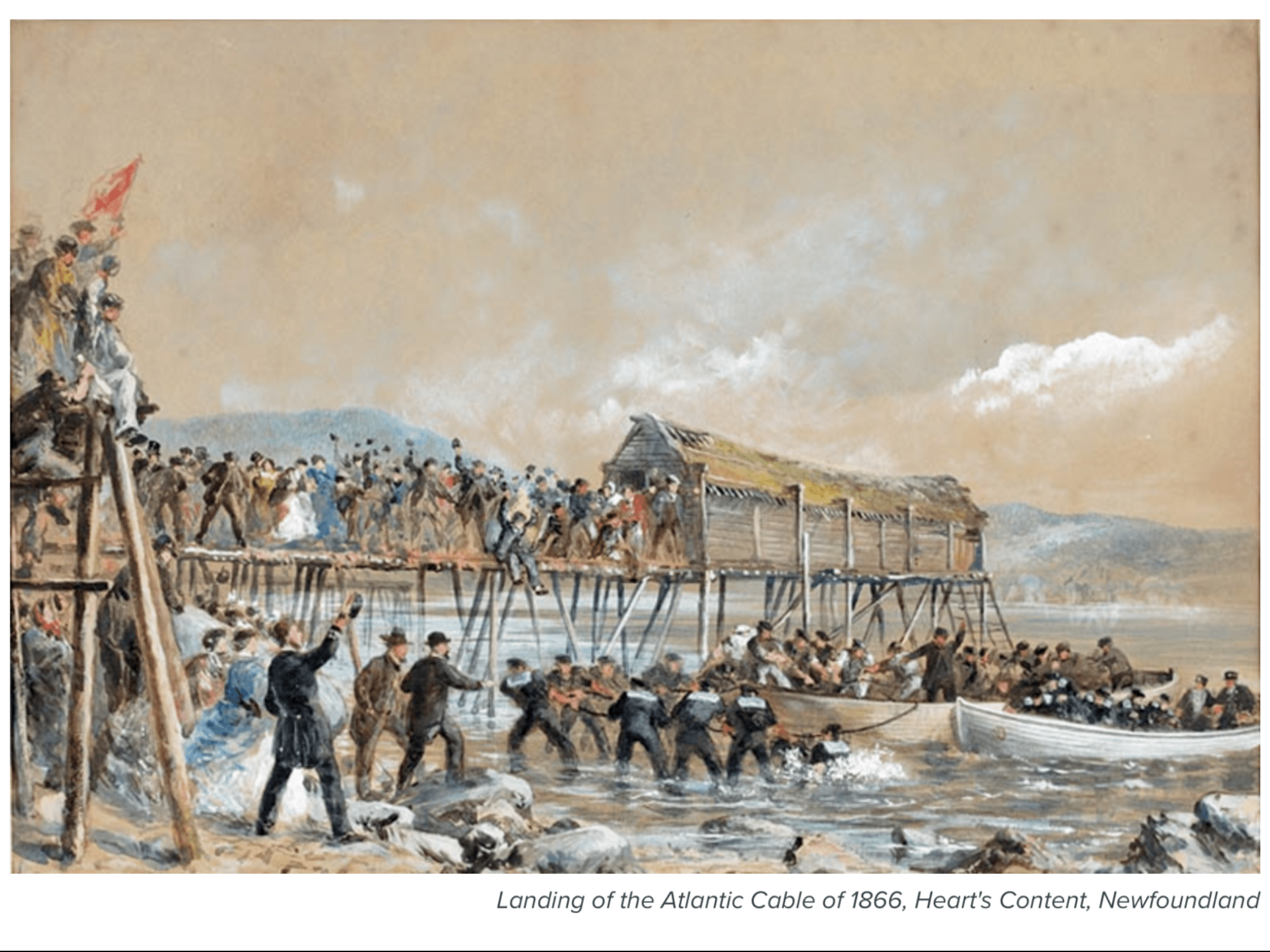
Source…https://www.flickr.com/photos/lac-bac/31367042642
On July 27th 1866, the first working public transatlantic telegraph cable was landed in Hearts Content, Newfoundland from Valentia Island off of the west coast of Ireland. Previous cables had failed and required upgrading and Morse code instruments needed to be developed to meet the new technical specifications. The ship used for the laying and delivery was the Great Eastern. She had been bought for a quarter of her worth in 1864, after she failed economically as a passenger ship, by three men, Daniel Gooch, Thomas Brassey, and John Pender, who set up The Great Eastern Steamship Company. They were then chartered for a significant share by the Telegraph Construction and Maintenance Company, and the Great Eastern was converted to allow the laying of the Atlantic Cable. The final cable was laid by the Anglo-American Telegraph Company who had taken over the task after previous cable snapped.
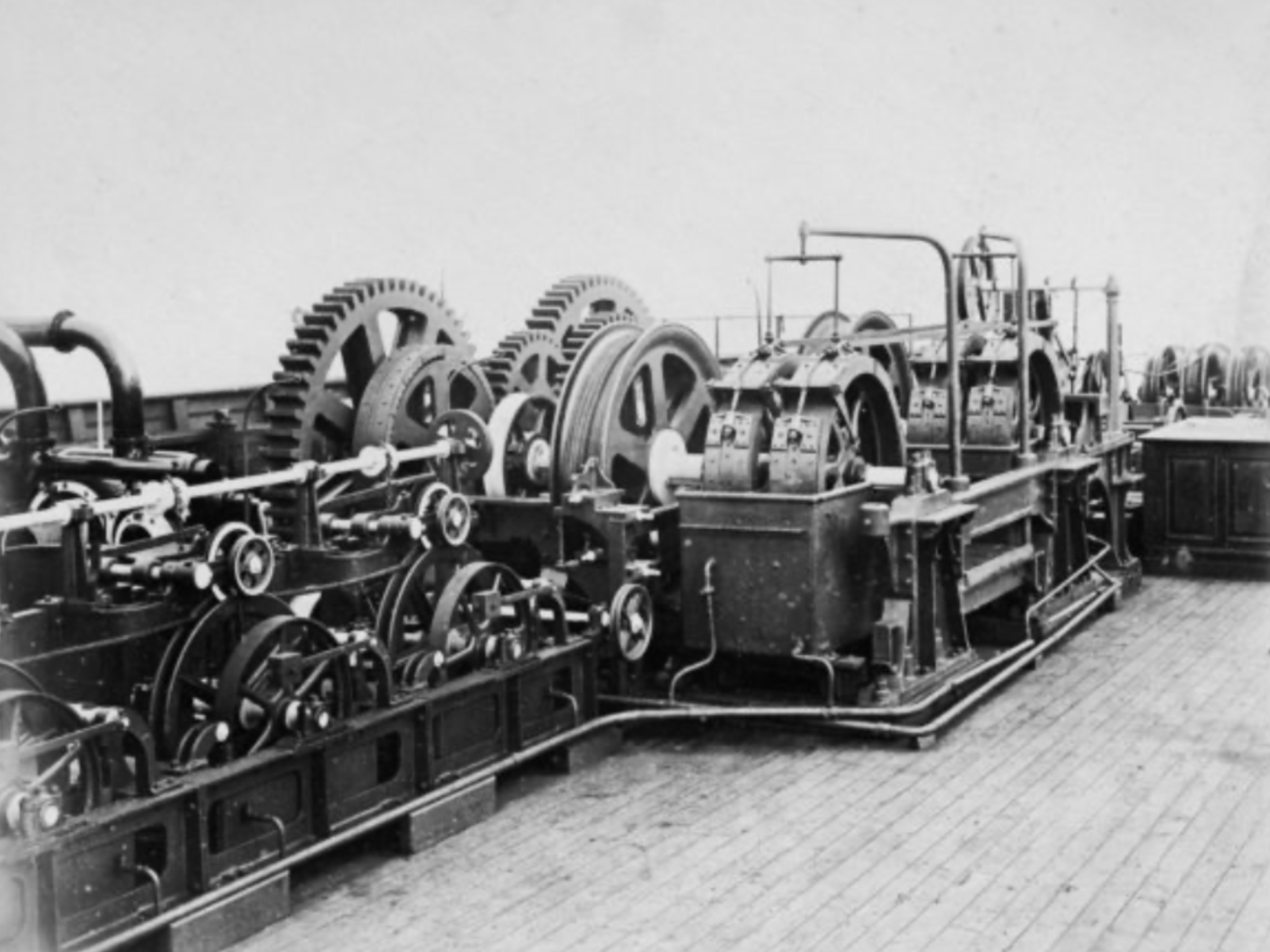
The cable laying mechanism fitted onto the Great Eastern in place of her fourth funnel. She lost some boilers and staterooms to allow for the open top tanks taking the coiled cable. She laid 2,600 miles during the 1865 attempt under Captain James Anderson. She continued to lay over 30,000 miles of cable until 1878, subsequently under Captain Robert Halpin. When her cable laying career was completed, she spent ten years being decommissioned and steadily declined into disarray until finally broken up in Merseyside.

In August 1866, the Great Eastern was one of a small convoy that set out to find and retrieve the broken end of 1062 miles of cable that had broken previously when being laid in August 1865. It was recorded at 38 degrees 50′ W and was about 2.5 miles down. Amazingly, the ships with the grappling hooks, after several unsuccessful attempts were able to secure the end of the cable and it was put aboard the Great Eastern where it was spliced into fresh cable in her hold. This was paid out and arrived in Hearts Content on September 7th, giving two working transatlantic telegraph cables.
The Great Eastern was remarkable for several reasons. As the largest vessel of her time, she was uniquely placed to undertake the task of laying 1600 miles of thick reinforced wire. The weight of the cable was substantial and the ship had been redesigned to accommodate this and the square footage required to store then lay it. Isambard Kingdom Brunel had designed the Great Eastern with the dream of a great ship that could carry passengers non stop from England to Australia. The building was not trouble free, and the launch was remarkable for being sideways into the Thames, (see previous blog) and the maiden voyage was troubled with an explosion and needed a refit. Brunel died soon after. Despite being designed for the Far East, she was used in Atlantic passenger transport and could not compete with the smaller faster vessels. The dream ship ended her days as a floating music hall and an advertising hoarding for a shop.
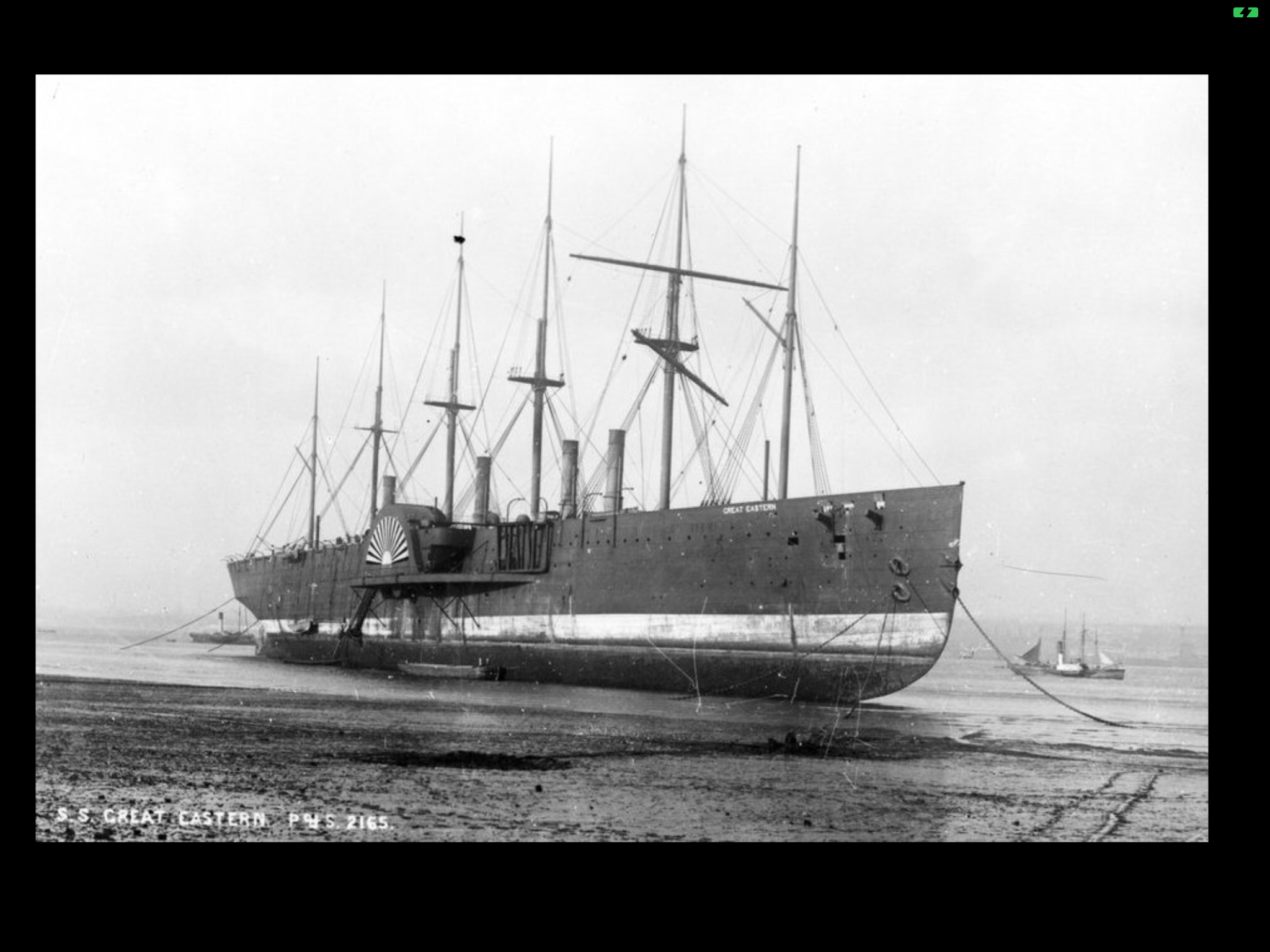
The Great Eastern prior to be broken in Merseyside. It was a sad end but she will be forever the ship that successfully laid the transatlantic telegraph cable.
 Julie Newman, visual artist
Leave a comment